The Radiologist
Die, My LoveThe Radiologist is the narrator’s neighbour, lover, and principal external witness to her disintegration, but he is never merely a rescuing romantic alternative. A married radiologist with a disabled daughter, he presents himself as an ordinary family man while secretly circling the narrator’s house on his motorcycle, converting desire into surveillance and eventually into a wordless negotiation with The Husband. His attraction gives the narrator an escape from domestic suffocation, yet it also reproduces the novel’s pattern of possession, bodily threat, and unstable identity.
Identity and Background
The Radiologist first appears through a perspective shift in which he studies the narrator from a distance. He knows the details of her clothes and habitual postures, notices that she wears wellington boots even when it is not raining, and observes the tight bun that resembles an imitation classical ballerina. He has never touched her back and does not know the exact colour of her eyes, which he imagines as grey or hay-coloured. His knowledge is therefore intimate in accumulation but radically incomplete: he builds a desired woman from repeated glimpses rather than from conversation.
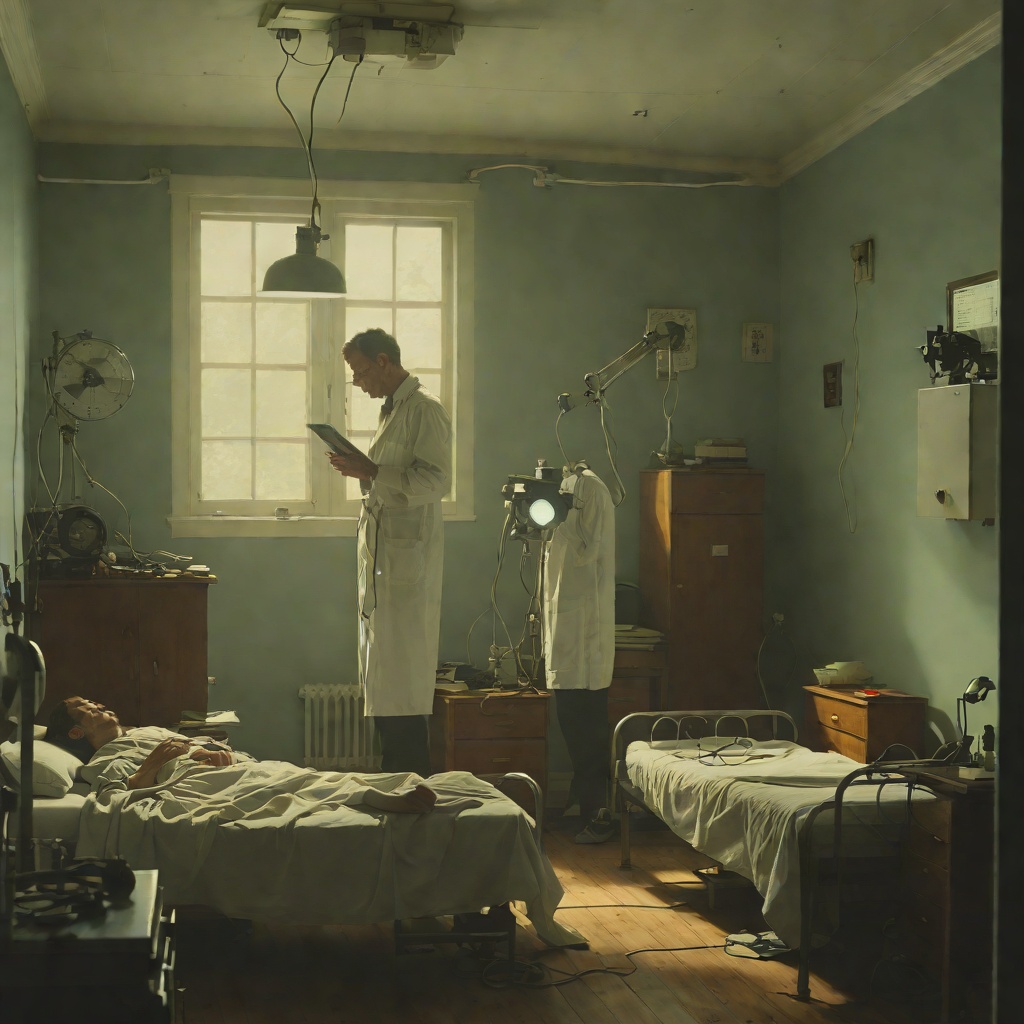
His public identity is emphatically conventional. He is in charge of the X-ray department at the city health clinic, graduated from the public university in the class of 1983, and was born and raised in the nearest city. He is married, has a daughter with special needs, and describes himself as easy-going and a man of the house. The narrator’s attention to these credentials creates an ironic contrast between professional competence and private compulsion. The man who examines bodies through medical images becomes unable to control the images produced by his own desire.
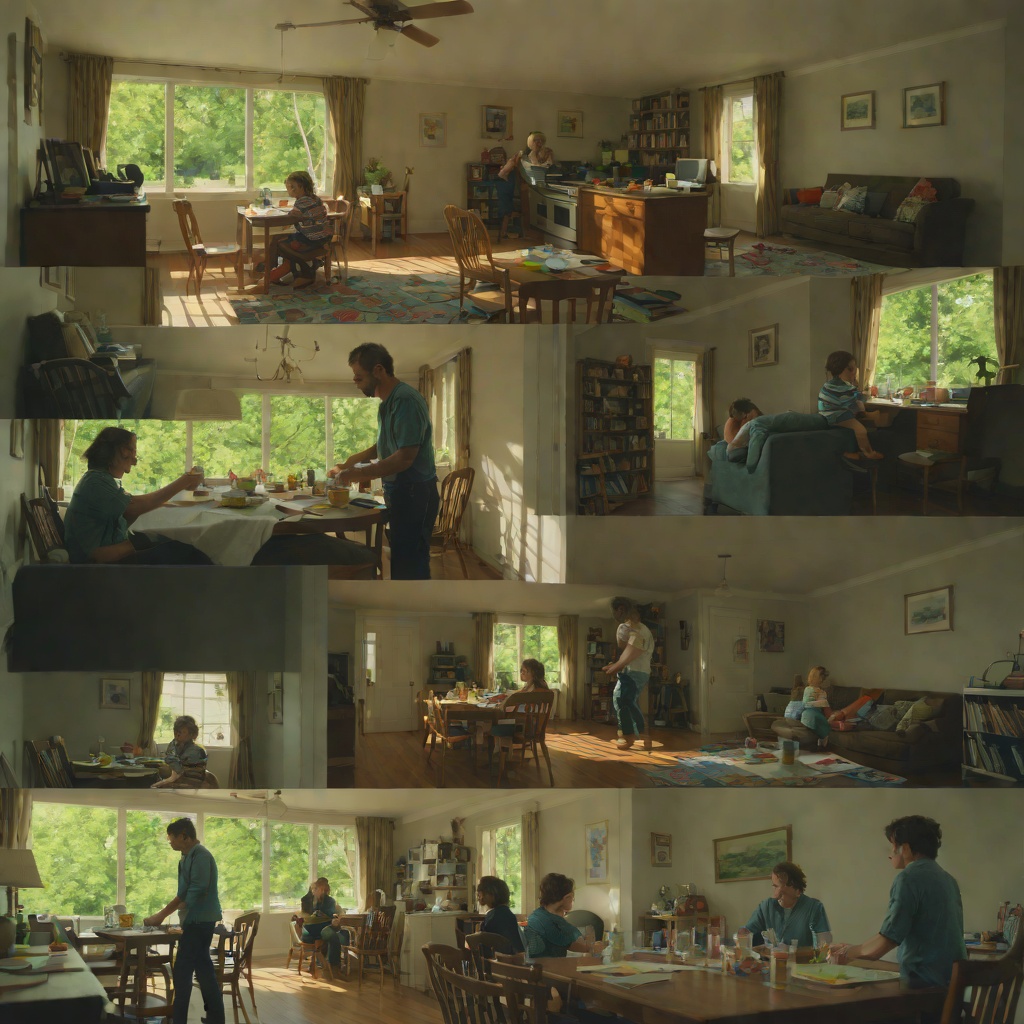
At home, The Radiologist appears affectionate and attentive toward his wife and daughter. He enjoys running his fingers through his wife’s soft hair and makes love to her slowly, taking account of her moods and menstrual cycle, only when their daughter is asleep. He feeds and bathes the child, holds her through convulsions, strokes her ankles, and wraps her in a feather duvet. Yet the narrator’s watching also registers the disturbing physical intensity of his care: he grips the girl’s bones, crushes her hips, pinches her skin, and smothers her with kisses. The daughter’s disability is not reduced to a simple moral emblem; it is embedded in the exhausting, tactile, and often frightening routines through which her father cares for her.
Desire and Surveillance
The Radiologist’s desire begins as a bodily disturbance before it becomes an articulated plan. His mouth is dry before he mounts his motorcycle, and the image of the narrator among flowers follows him for the ten miles between her house and his own. Farms, animal pens, poultry houses, cow dung, and hunting dogs form the ordinary landscape through which the image travels, but the image contaminates that familiarity, growing inside him and producing chaos. He cries on the kitchen floor, pounds the tiles with his fists, and longs for the physical particulars of the narrator’s finger bones, hips, and buttocks.
His motorcycle is both vehicle and ritual instrument. He drives slowly enough to prolong the fatal seconds during which he can see her at the gate or in the garden, and he once rides up to her front gate only to retreat when the engine frightens her. Later he leaves home at night, pushing the motorcycle a block before starting it so that his wife and daughter will not hear. He passes chopped trees, rabbit skulls, nocturnal butterflies, and armed men, then approaches the narrator’s house through darkness. His route turns ordinary rural space into a map of obsession.
The midnight visit crosses the boundary between fantasy and intrusion. The Radiologist enters the narrator’s garden, touches the gate latch, walks around the house, and imagines her descending in a white nightdress or appearing with red eyes at the window. He feels the hatred he associates with her depression and fears being infected by it, even as he calls her beautiful. This contradiction is central to his characterization: he wants the narrator as an antidote to ordinary life while treating her suffering as a dangerous substance that might spread to him.
The narrator later reverses the direction of surveillance. Riding a bicycle, she watches The Radiologist in his house while The Husband is away and The Son is at his grandmother’s. She sees him holding his disabled daughter during her spasms and interprets the scene through jealousy, erotic fantasy, and animal imagery. Her desire becomes so forceful that she imagines putting her fist through the window and raping him. The scene does not establish a stable romantic hierarchy; instead, each lover becomes watcher and watched, and each transforms the other into an image before genuine knowledge can occur.
Affair and Conflict
The affair is concealed within a household already organized around suspicion. When The Husband finds the condoms melted in the car’s glove compartment, he links them to a dream about the narrator in bed with the neighbour and demands to know who the motorcyclist is and what he wants. The narrator denies everything, even as her account reveals that The Radiologist has entered her body and that the affair has become inseparable from her sense of being killed and remade. The Husband’s demand for an explanation meets the narrator’s refusal of language; jealousy then becomes physical, producing blows, accusations, and her flight through the glass door.
The Radiologist is therefore not simply the cause of the marital conflict. His presence exposes a marriage already saturated with alienation, sexual violence, and competing claims over the narrator’s body. The Husband’s questions, the narrator’s denials, and The Radiologist’s silence create a triangle in which words fail precisely when the stakes become highest. The narrator’s imagery turns the affair into an invasion by a snake, a machete, and a darkened body, making desire feel less like a chosen romance than an overpowering force that destroys the self it enters.
After the narrator is brought to the hospital unconscious, The Radiologist remains an unseen force in the scene of recovery. Nurses remove shards, splinters, slivers, and tiny mirrors from cuts across her shoulder blades, chest, belly, and neck. The Husband visits with flowers and touches the wound on her neck while questioning her about the condoms and her absences at McDonald’s. The physical glass fragments make the affair’s consequences materially visible, but The Radiologist himself remains outside the clinical scene, present through accusation, memory, and the narrator’s refusal to provide a clean account.
Confrontation and Agreement
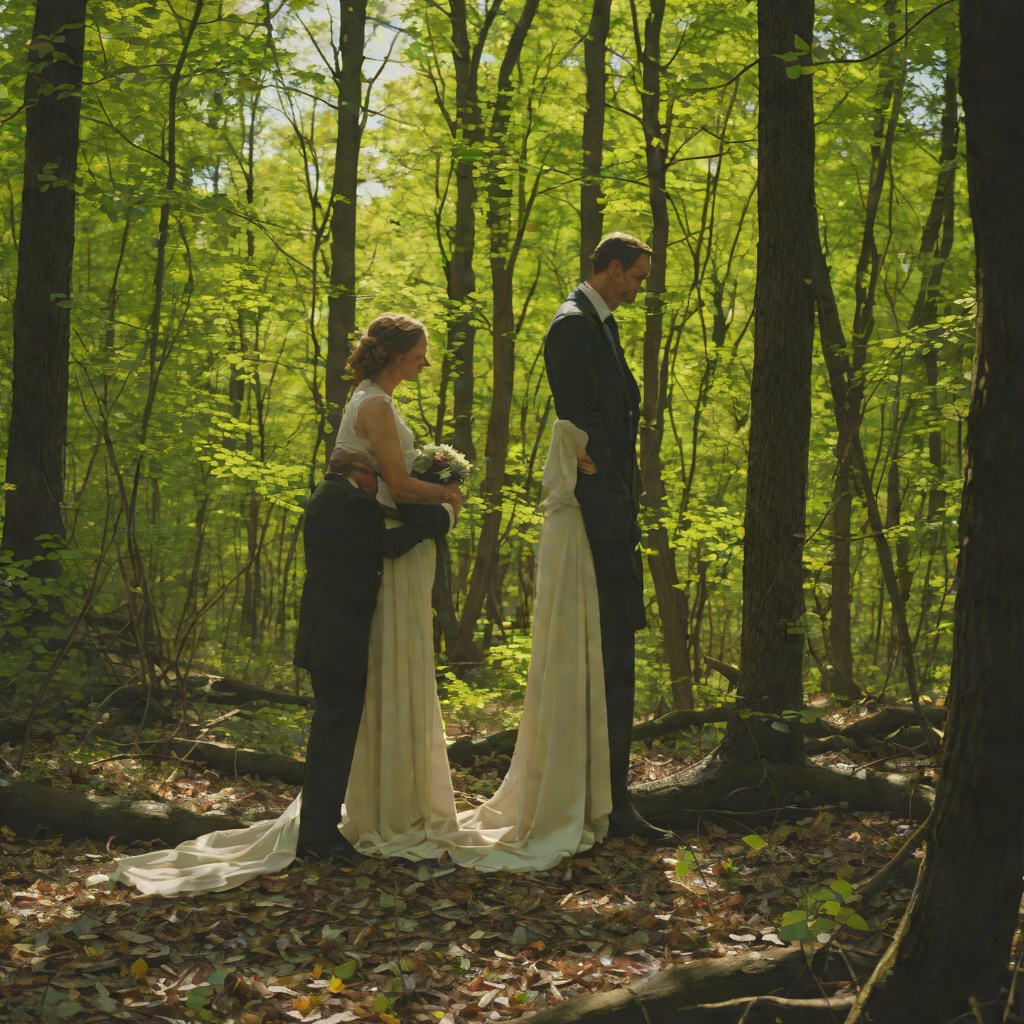
The Radiologist and The Husband finally meet after the narrator drives away from a family gathering in a convertible and goes to his house. She finds The Radiologist’s disabled daughter alone upstairs while neither The Radiologist nor his wife is at home. When the couple returns from gathering mushrooms, The Radiologist takes the narrator by the arm and leads her away from the house. They face each other without speaking and kiss. The kiss is marked by the narrator’s glass wounds and salty blood; she experiences it as a painkiller and as a temporary interruption of death.
The arrival of The Husband changes the encounter from a private reunion into a confrontation between two men. He comes on a motorcycle too small for him, making him look fourteen, and the narrator sees the two men as bulls, stallions, or pawns suddenly placed together. They walk into the open fields beyond her hearing. The text withholds their words, replacing dialogue with gestures, slight movements, nods, a yawn, and a laugh. Their agreement is therefore not explained but inferred through bodily signs, as though the men have reached an arrangement that language cannot or will not disclose.
The Radiologist’s role in this agreement remains deliberately unstable. The narrator imagines a market transaction in which one of the two men will become her black-market buyer, asking herself what home would receive her and what name she would be given. The man who returns to her is The Husband, whom she calls the more loyal of the two, while The Radiologist remains behind as the alternative that has been considered and rejected, or perhaps merely deferred. The separation is not resolved through confession, moral judgment, or romantic fulfilment; it is settled through an opaque male pact that leaves the narrator trembling and excluded from the decision.
Narrative Role and Significance
The Radiologist embodies the collision between respectable identity and unruly appetite. His clinic, marriage, fatherhood, and cultivated self-description suggest order, while his nocturnal departures, motorcycle surveillance, invasive fantasies, and uncontrolled physical longing reveal a parallel life that cannot be contained by those social roles. The contrast is sharpened by his care for his disabled daughter: tenderness and coercion coexist in the same gestures, refusing the reader an uncomplicated image of either a good father or a monstrous one.
He also intensifies the novel’s unstable narrative structure. The narrator temporarily speaks through his consciousness, then later watches him from outside, so that desire passes between perspectives without becoming reliable knowledge. His imagined intimacy depends on clothing, posture, smell, speed, darkness, and bodily surfaces rather than on mutual speech. Even the final agreement with The Husband is understood through gestures alone. The Radiologist thus belongs to a world in which language repeatedly fails, while images and physical intensities circulate with greater force than explanations.
His connection with the narrator offers neither a conventional escape nor a stable alternative family. The affair briefly makes another life imaginable, but the lovers’ desire is repeatedly fused with illness, injury, jealousy, animality, and death. By the time The Radiologist kisses the narrator after her body has been cut by glass, intimacy has become both analgesic and evidence of damage. His final withdrawal from the road-side pact leaves the narrator returning with The Husband toward the woods, carrying the knowledge that the other man has changed the terms of her life without giving her a secure place within it.